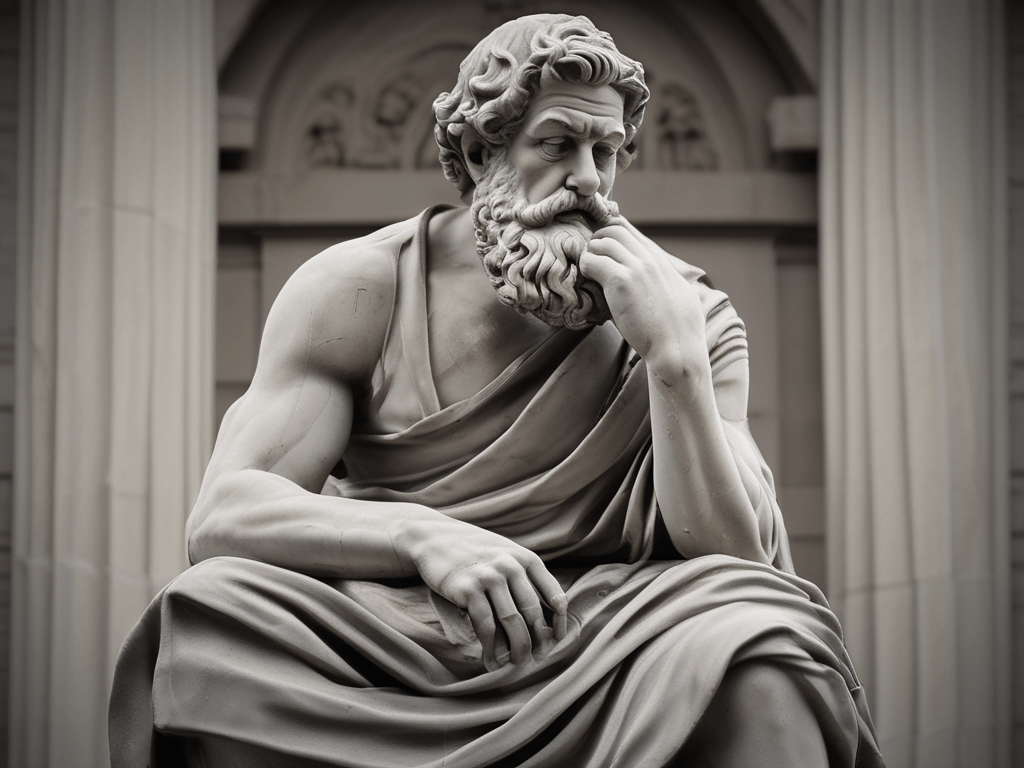
Aristotle, the famous Greek philosopher, had a unique and complex view of what it means to live a good and fulfilling life, which he called “eudaimonia.” This concept is often translated as “flourishing” or “happiness,” but it’s more than just feeling happy—it’s about living a life that is truly excellent and meaningful.
Aristotle believed that a flourishing life is understood through three key dimensions:
- Virtue (Arête):
Virtue refers to the qualities that make something or someone good at what they do. For instance, the virtue of a doctor is their skill in healing people. Aristotle thought that being good at something—whether it’s being a doctor, a friend, or a citizen—was an essential part of living a good life.
2. Practical Wisdom (Phronesis):
Practical wisdom is the ability to make good decisions and take effective actions. It’s not just about having good intentions or being a good person; it’s about knowing how to achieve your goals. For example, a good doctor not only has the knowledge of medicine but also knows how to apply that knowledge to help their patients.
3. Moral Strength:
Moral strength is the ability to do the right thing, even when it’s difficult. This involves not just knowing what’s right but also having the self-discipline to overcome personal desires that lead you astray. Aristotle thought that true flourishing required us to act in ways that align with our values and principles.
According to Aristotle, to truly flourish, a person needs all three of these qualities—virtue, practical wisdom, and moral strength. But he also recognized that living well isn’t just about having these internal qualities; it also depends on external factors, like having enough resources and good relationships with others.
Aristotle’s concept is not just about happiness, but also about living a fulfilling life by realizing our potential through virtue, wisdom, and moral strength, within a supportive environment. That is Eudaemonia.
I hope you now understand Eudaemonia, which is different from happiness, pleasure, or bliss. Let’s now explore the concept of ‘the highest good’ or ‘the highest purpose of human life’.
Aristotle believed that most of our actions are done for a purpose. For instance, if you decide to study, you might be doing it to gain knowledge, which in turn might help you get a good job. In this way, the end goal, like getting a job, is more important than the action of studying itself. Aristotle also noted that our actions often follow a certain order or hierarchy, where some goals are more important than others. He argued that if this hierarchy of goals went on forever, then our lives would be meaningless. Therefore, there must be a highest goal or “highest good” that gives meaning to all our actions. According to Aristotle, the highest good, which we value above all else, is crucial for a truly fulfilling life.
Aristotle pointed out that all our efforts in science, art, and other areas of knowledge aim at achieving something good for humans. He believed that the good of a group of people is always better than the good of an individual. The science that deals with the collective good is politics. According to Aristotle, politics is the most important science because it governs all other areas of life and aims at the highest good for everyone. But what is this highest good?
To find the highest good, Aristotle used a process of elimination. He ruled out pleasure, because even animals experience it, so it’s not unique to humans. He dismissed honor because it depends on others’ opinions rather than our own actions. He also rejected wealth because it is merely a means to an end, not an end in itself. Finally, he disagreed with Plato’s idea that the highest good is an abstract concept, arguing that the highest good must be something specific to human beings.
Aristotle concluded that the highest good is something we aim for its own sake, not for something else. That most final end is always chosen as an end or goal, and never as a means to any other end. This highest good, he argued, is “eudaimonia,” which can be understood as “flourishing” or “happiness.” Happiness, according to Aristotle, is the only thing we seek for its own sake, while other things like pleasure, honor, and wealth are sought partly because they can bring happiness.
Aristotle also emphasized that happiness is self-sufficient, meaning that if you have it, you don’t need anything else to make your life worthwhile. For example, you might have wealth or honor but still be unhappy. But if you are happy, then it is irelevant whether have health or wealth or honor or not. If you have happiness, you have everything you need to live a good life. This makes happiness the most desirable good.
To understand what happiness truly is, Aristotle believed we need to understand the unique function of human beings. The function of a thing is also always a function of an excellent example of that thing. It has to be unique to that thing. The function of a musician is to play music beautifully. Not dance but music. Also, it is not the function of a bad musician to play music badly. So the unique function of a musician is to play music beautifully. He pointed out that what sets humans apart from other creatures is our ability to reason. Therefore, the function of a human being is to live a life guided by reason and virtue. In this way, living according to reason and virtue leads to true happiness.
Aristotle’s philosophy teaches us that the ultimate goal of life is to achieve happiness through reason and virtue. By understanding and fulfilling our unique human function, we can live a life that is truly meaningful and complete.
 Home
Home 
Leave a comment