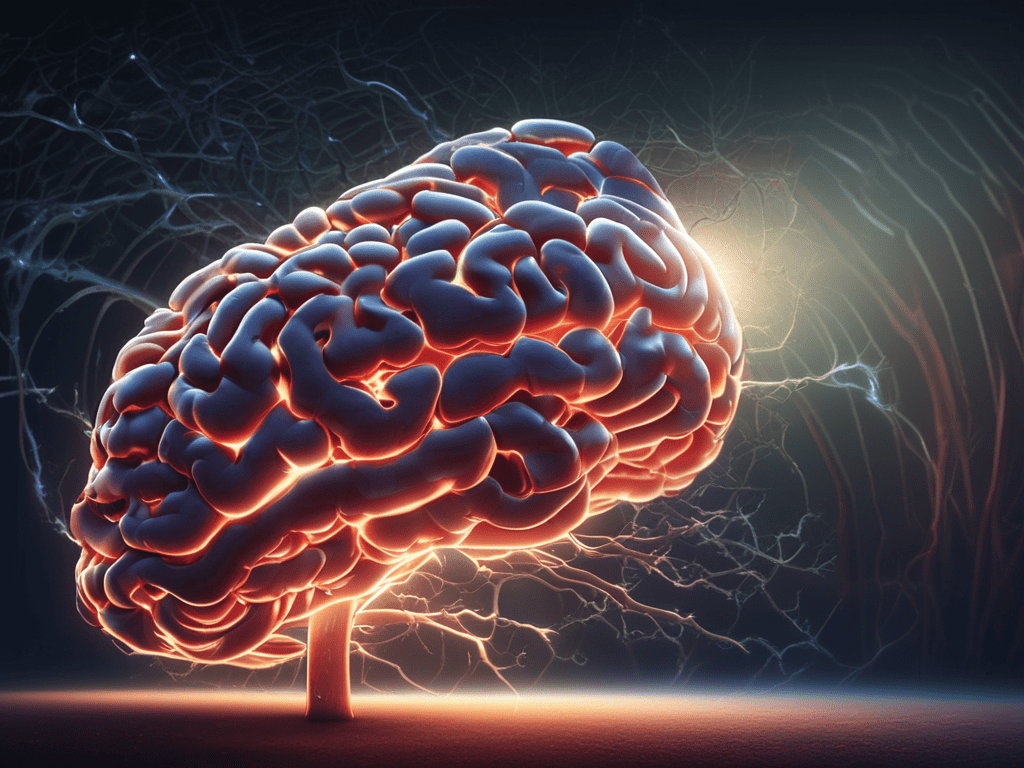
As someone deeply interested in the topic of consciousness, I was profoundly moved and enlightened by Anil Seth’s TED talks. These talks and his book, Being You, have become cherished resources in my journey to understand the nature of consciousness. My fascination with this topic also draws me towards spiritual wisdom traditions such as Vedanta and meditation, as they offer unique perspectives on the nature of the self and experience. Here are some key learnings from Anil Seth’s work that have significantly raised my consciousness:
Consciousness as a Process, Not an Entity
One of the most eye-opening ideas from Seth’s work is the concept that consciousness is not a static entity but a dynamic process. Seth emphasizes that consciousness is essentially synonymous with experience. This means that consciousness is always about something—it’s always a consciousness of something. This perspective shifts our understanding from viewing consciousness as a fixed trait to seeing it as an ongoing, ever-changing process.
The Self as a Controlled Hallucination
Seth argues that what we perceive as the self is not a unified, enduring entity. Instead, the self is a collection of perceptual predictions generated by the brain to regulate the body. These predictions include our sense of continuity over time, our feeling of free will, our perspective on the world, and our sense of embodiment. This idea can be illustrated through color perception. Seth explains that color does not exist independently in the world; it is created by our brains based on sensory inputs. For example, the redness of a coffee cup is a prediction made by our brain, not an intrinsic property of the cup itself.
The Brain as a Prediction Machine
Central to Seth’s theory is the idea that the brain is a prediction machine. It continuously generates predictions about the causes of the sensory signals it receives. These predictions are what we experience as our perceptual reality. Our brain’s best guesses are constantly updated based on the difference between what it predicts and what it actually receives. This process is what Seth calls a “controlled hallucination.” It highlights the active construction of our experiences by the brain, rather than a passive reception of the world around us.
The Impact of Anesthesia on Consciousness
Seth also delves into how anesthesia affects consciousness. Under general anesthesia, people are not merely asleep; they enter a state of oblivion comparable to the period before birth or after death. Anesthesia works by disrupting the communication between different parts of the brain, effectively “turning off” consciousness. This disruption shows just how crucial the brain’s integrated activity is to our experience of being conscious.
The Spiritual Connection
Seth’s ideas challenge traditional spiritual notions, such as the concept of Atma (self or soul) as an independent, unchanging entity discussed in the Upanishads. According to Seth, our sense of self is not a timeless Self or Soul but a collection of perceptual predictions shaped by the brain to help us stay alive. This scientific perspective provides a new way of understanding the self and consciousness, aligning more with a dynamic and ever-changing process rather than a static essence. You are not a thing having an experience. Rather, you are identical to experience.
Anil Seth’s work offers a profound and transformative understanding of consciousness. His ideas challenge us to reconsider our assumptions about the nature of the self and the world around us, revealing the intricate and dynamic processes that underpin our experiences. For anyone interested in exploring the mysteries of consciousness, I highly recommend diving into his TED talks and his book, Being You. They are truly enlightening resources that can deepen your understanding and appreciation of the complex phenomenon of consciousness.


Leave a comment