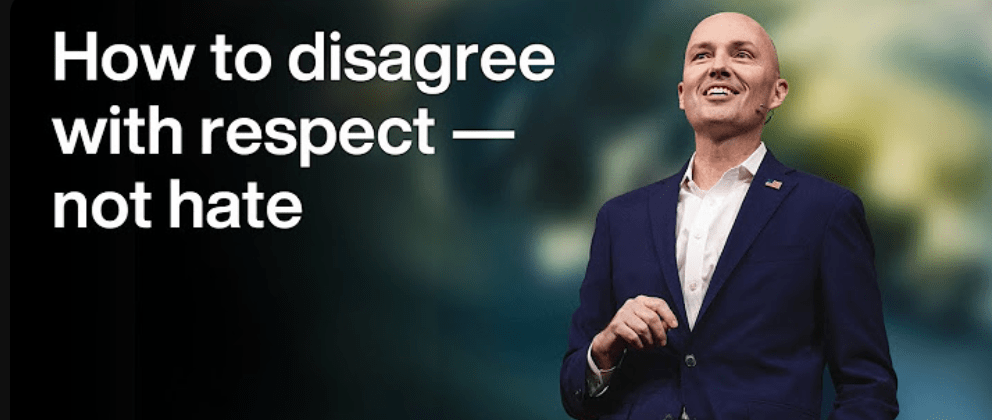
In his TED Talk, “How to Disagree with Respect — Not Hate,” Spencer J. Cox shares valuable insights on the importance of respectful disagreement and the preservation of democracy. He begins with a quote from Ronald Reagan, who became the governor of California in 1967. Reagan highlighted the fragility of freedom, stating, “Freedom is a fragile thing, and it’s never more than one generation away from extinction.”
Spencer Cox admits that he used to think this warning was exaggerated. However, his perspective changed during his time as Lieutenant Governor of Utah when he witnessed firsthand the intensity of political protests. In 2016, during a routine certification of presidential election votes, he encountered angry protesters who believed the election had been stolen. Surprisingly, these were not Trump supporters in 2020 but Hillary Clinton supporters in 2016.
This experience opened his eyes to the deep divisions in American politics. Four years later, as he was running for governor, the polarization worsened. With protests from both the extreme left and right undermining the election’s validity, Cox felt a strong urge to do something. He reached out to his opponent, Democrat Chris Peterson, with a bold idea: to film a campaign ad together. Peterson agreed, and they created an ad emphasizing that they could debate without degrading each other and that win or lose, they would work together for Utah.
The ad went viral, receiving millions of views and shares worldwide. It showed that there was a desire for respectful political discourse. This sentiment was further validated when a professor submitted their ad to Stanford’s Polarization and Social Change Lab. The ad was part of an experiment that showed it had a measurable depolarizing effect, including reducing urges towards violence.
Cox stresses that Americans aren’t as divided on issues as they think. The problem lies in the perception gap fueled by media and political conflict entrepreneurs. Both sides overestimate the extremism of the other by about 30%. This gap is most pronounced among those most engaged in politics.
To bridge this divide, Cox suggests practical steps everyone can take. First, turn off and tune out conflict-driven media. He shares how he and his wife stopped watching cable news 11 years ago, leading to better mental health and family life. Studies support this, showing that more news consumption can lead to stress and anxiety.
Second, spend more time with people who are different from you. Building relationships with those who hold different views can reduce hatred and promote understanding. Asking someone to explain their perspective can be enlightening and foster empathy.
Third, engage in community service. Volunteering not only helps others but also improves our outlook on life and reduces stress. Aristotle’s advice to “serve others and do good” remains relevant.
Lastly, cultivate virtues like humility, patience, and moderation. These qualities are essential for respectful political discourse. Cox quotes Judge Learned Hand, who said, “The true spirit of liberty is the spirit which is not too sure it is right. The spirit of liberty is the spirit which seeks to understand the minds of other men and women.”
Cox reminds us that securing freedom requires continuous effort from each generation. It is our duty to disagree without hate, rise above political differences, and love our enemies, even our political opponents. By changing our hearts, we can change the world.


Leave a comment