Category: Self-Management
-
Why Anger is Repulsive
“Anger is an acid that can do more harm to the vessel in which it is stored than to anything on which it is poured.” – Mark Twain I believe of all the emotions that a person displays, anger is the most repulsive. Here are a few potential reasons why anger might be seen as…
-

Why never plan a retirement that relies on children
It is common in many cultures for parents to prioritize their children’s needs and well-being above their own. In India, very common for parents to make significant sacrifices in order to provide for their children’s education, health, and future prospects. This may include working long hours, saving money, or even putting their own career aspirations…
-

Strength Training at Home without Equipment
Strength training is a type of physical exercise that involves resistance or weight training to build and strengthen muscles, bones, and connective tissues. Strength training can be done using body weight, free weights, resistance bands, machines, or any other equipment that provides resistance to muscles. The importance of strength training lies in the numerous benefits…
-

Fitness for Women after 40
Staying fit after 40 requires some extra effort and attention to specific areas of health and wellness. Here are some tips for women to stay fit after 40: By incorporating these healthy habits into your daily routine, you can stay fit and healthy well into your 40s and beyond.
-
What is the difference between emotion, mood and feelings?
Emotions, moods, and feelings are related to each other but are distinct concepts. Here’s a brief explanation of the differences: In summary, emotions are specific responses to a particular stimulus, moods are more general states of mind or feeling, and feelings are subjective experiences that can be triggered by emotions or moods.
-

Thumb rules for Financial Wellbeing
Pay yourself first: As you get paid, put money into savings. Automating it is the best. Build an emergency fund: Save for emergencies an equivalent of six months of your living costs. Use the 50/30/20 rule for Budgeting: Allocate 50% to needs, 30% of your monthly income to wants and 20% towards investments or savings…
-
Eating Right
I love mental models and I use them wherever possible. They are not always perfect but they are sufficient to help you make better choices. There are five components to fitness viz. cardio vascular endurance, Muscular strenth, muscular endurance, flexibility and body composition. The formula to achieve the right body composition that supports the other…
-
Listen to the Universe
There are these times…. extraordinary times, when you tune into life, with just the right equipment and orientation, to listen closely to what it is trying to tell you. It is as if you are trying to tune into a radio station on an old transistor radio without exactly knowing the frequency or the right…
-
Everything You Believe will be Put to Test
There comes a day when everything you believe and took pride in being will be put on trial, questioned, challenged and put to test. You will be asked to narrate the story of your life and your choices, decisions and responses to situations will be judged. Your claim over your achievements will be challenged. Your…
-

Life: The Journey of Letting go
Everyone knows we don’t live forever and that life, this life is short. The things we hold most dear to our hearts- the people we love, our achievements, our wealth and possessions, even our own lives – we simply need to leave behind when we die. In this journey of life, we seem to lose…
-
The Surefire Way to Health and Longevity: Intermittent Fasting
As Millennials, we have a lot of challenges in the sphere of spirituality, physical and mental health. But if one has to give one prescription that can provide relief to many of our physical, mental, and spiritual ailments, it is Intermittent Fasting In simple words, Intermittent Fasting is the practice of alternating periods of eating…
-
Life: The Journey of Letting go
Everyone knows we don’t live forever and that life, this life is short. The things we hold most dear to our hearts- the people we love, our achievements, our wealth and possessions, even our own lives – we simply need to leave behind when we die. In this journey of life, we seem to lose…
-
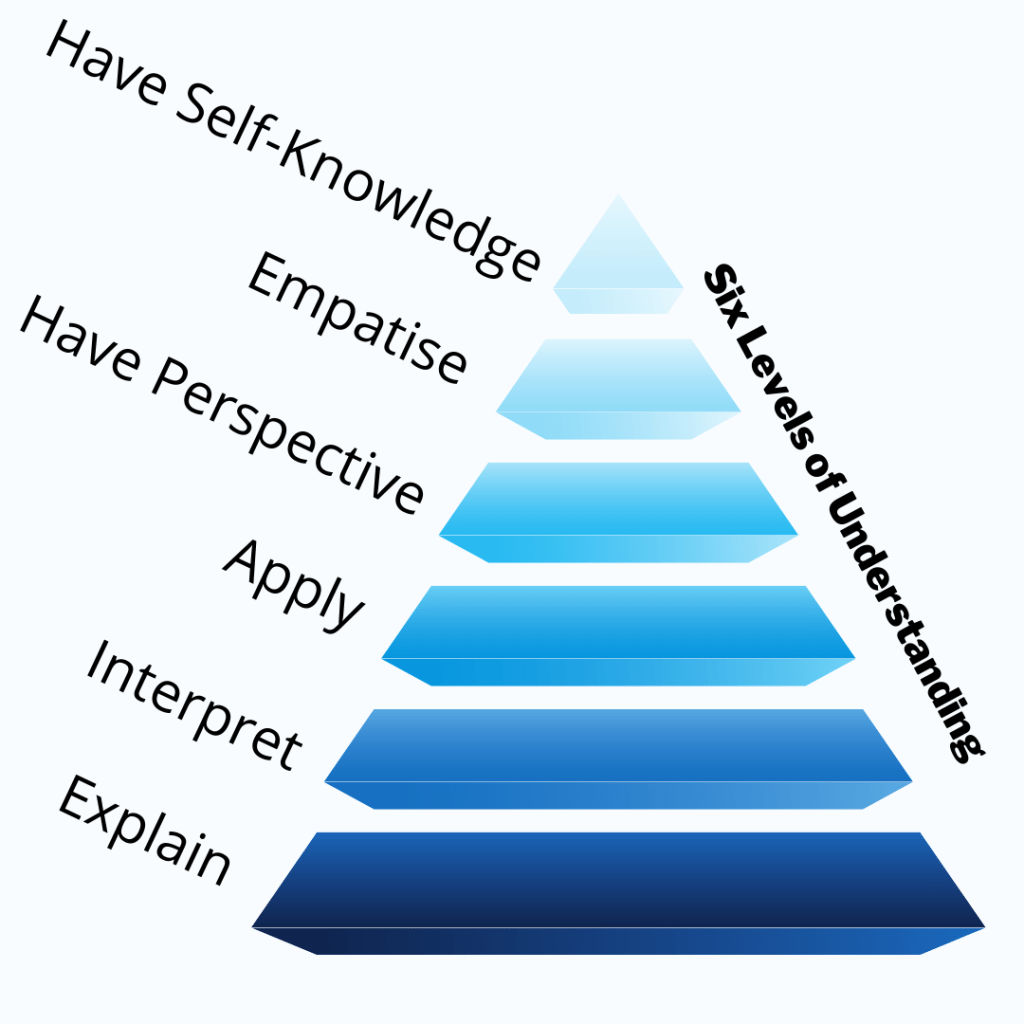
What it means to Understand
What do we mean when we say ‘I understand’ – in a relationship, in business, in academics, in the study of Vedanta? In their book, Understanding by Design (1998), Grant Wiggins and Jay McTighe discuss “Six Facets of Understanding.” They came up with these six facets of understanding to help instructional designers to check if…
-

10 Ways Social Media Addiction Can Ruin Your Life
The world seems to be hooked on the five great social media platforms viz. Facebook, Twitter, Instagram, Snapchat and WhatsApp/WeChat spend billions of collective hours each day lost in their wonderland. (Tiktok may be next in the list) I am no authority on this to advise and you need not take me advice, even if…
-

Building Spiritual Intelligence
There is enough talk about Intelligence Quotient (IQ) and Emotional Quotient (EQ) in academic and corporate circles today with several ways of measuring, analysing and building one’s intelligence in problem-solving and emotional management. The two play an important role in a person’s pursuit of security, happiness and values. Are these enough to describe our ability…
-
Economics in 10 Principles
There is a reason why children when asked ‘what do you want to grow up to be?’, never answer ‘Economist’. The reason simply is that children have not been told or made to think about the idea of economy or economics. For children, everything is in limitless supply, though they may not have everything. Economics…
-

Understanding and Transforming Boredom
The great philosopher Arthur Schopenhauer once said, ‘The Two enemies of human happiness are pain and boredom.’ The associations with boredom have invariably been negative and it is seen as undesirable by most. Another great philosopher Soren Kierkegaard confirms the same when he says ‘There is something more terrible than a hell of suffering: a…
-

Choosing Between Pleasure and Happiness
The ancient wisdom of Vedanta tells us that we are frequently posed with a choice in life between Preyas and Shreyas (Sanskrit). Preyas includes all desired activities by an individual at a given point in time while Shreyas includes that which is desirable for all people of all times and places, namely freedom from unhappiness,…
-

All love is Self-Love
We all have at some point in life experienced love. It may be the love of people, of animals or even plant forms, of things, activities and so on. The message with this post is that there is essentially only one form of love and that is self-love and it is this self- love that…
-

Breaking out of the dreaded drama triangle
Every once in a while, all of us find ourselves entangled in interactions that are negative and destructive. We refer to these kinds of conflicts as the Dreaded Drama Triangle. In any relationship conflict, there are three roles and each person involved dons one of these three roles, most of the time. You play one…
-

Understanding the five coverings of our personality and our experiences
There are several ways of looking at our sense of our own individuality, our sense of experience of this world and that of ourselves. Here, I would like to share one of the ways Vedanta looks at personal experiences as well as our personality.
-

Learning to take charge of emotions
All of us have emotions. Some of us are more sensitive than others but we all have them. Emotions can be both positive as well as negative and they influence how we think and act. This makes emotions a very important aspect of our personality to manage. I did a bit of research online to…
-

Use money to find freedom, not bondage
If I have to pass on only one financial advise to my daughter it would be to never get into debt. In borrowing for the present pleasure, we rob ourselves of the future peace and happiness. With the growth of banking and financial institutions, living with debt has become the norm today. To pay EMIs…
-

Minding our swear words and gestures
Why it is important to mind our language and what it can mean for our children.
-

Breaking the cycle of obsessive thinking
Once we become mindful of the chain of cause and effect and merely act as a witness, without engaging with them, they lose their power. When this clarity dawns upon our minds, we feel lighter, positive and cheerful.
-

Harnessing the power of healthy daily routines
‘You’ll never change your life until you change something you do daily. The secret of your success is found in your daily routine.’ – John C. Maxwell
 Home
Home 