Category: Value Parenting
-
The Power of Repair: Why It’s Never Too Late to Reconnect with Your Child
If you’re a parent, chances are you’ve had at least one moment where you’ve lost your temper — maybe even more than one. The kind of moment where you say something you regret, where the anger spills out before you can pull it back in. The guilt that follows can be crushing. You tell yourself,…
-
The Beautiful Trouble of Raising a Human
Parenting is not a profession, a project, or a plan—it’s a wild, messy, magical relationship. From the moment a child is born, a parent is thrown into a lifetime of balancing joy and frustration, love and fatigue, laughter and tears. It is both the hardest and most rewarding journey a person can embark on. And…
-
Why I Love America’s Free, Quality Public Education as an Indian Immigrant
Moving to the U.S. for work has been a big change for me personally and a meaningful transition for my daughter as well. Coming from a proud background of Indian middle-class values, I hold deep respect for hard work, responsibility, and gratitude. At the same time, I feel incredibly fortunate to participate in the civic…
-
From Spectator to Participant: Why Playing a Game Beats Watching It
I have seen first-hand the frustration and heartbreak that a billion people experienced when India lost the Cricket World Cup finals yesterday to Australia, despite being unbeaten in all the previous games. All the wishes, cheering, prayers and tears amounted to nothing. That can hurt and haunt people for a long time. I even watched…
-
Arrogance in Relationships
In the delicate dance of love and companionship, one factor that can be incredibly detrimental to a relationship is arrogance. Wallowing in arrogance occurs when one partner consistently displays a sense of superiority over the other, causing harm that often goes unnoticed until the damage is profound. This form of toxic behavior can manifest in…
-
Of Pretend Play & Fiction Writing
In the second year of life, children start pretending with simple acts, like pretending to sip imaginary milk from an empty cup. Their pretend play becomes more complex and imaginative as they enter preschool years. However, there has been a belief that pretend play declines as children enter middle childhood and engage in activities like…
-
Why Second Marriages can fail faster
Second marriages, like first marriages, can fail for a variety of reasons. Here are some common factors that contribute to the failure of second marriages: It’s important to note that while these factors contribute to the failure of some second marriages, many second marriages are successful and fulfilling. With open communication, commitment to personal growth,…
-

Teaching a teenager to share
Caring and sharing are both important values that contribute to healthy relationships and a sense of community. They complement each other, and practicing both can help us to build stronger connections with others. Caring refers to a feeling of concern, empathy, and compassion towards others. When we care about someone, we want them to be…
-

How parents can prioritize their time
As parents, we want to take up the responsibility of raising our children entirely. But many of us think this means we try to do everything we can to contribute to parenting. Juggling between work and home, if not done right, can get stressful and ultimately affect both work and home. Being hard-pressed for time…
-

Questions to uncover your Personal Well-being Recipe
What is human flourishing and what enables it? Dr. Seligman’s PERMA™ theory of well-being is an attempt to answer these fundamental questions. There are five building blocks that enable flourishing – Positive Emotion, Engagement, Relationships, Meaning, and Accomplishment (hence PERMA™) – and there are techniques to increase each. Different people will derive well-being from each…
-

Emotional needs of children as they grow
Statistics show that 50% of mental health problems are established by age 14 and 75% by age 24. It is easy for us to identify a child’s physical needs: nutritious food, warm, clean clothes, a roof over their heads, routine bedtimes, and medical care when needed. However, a child’s mental and emotional needs may not…
-

Launching your Child
I had given an overview of a family lifecycle in a blog post previously. On this post I diving deeper into the 2nd last stage of this lifecycle viz. the launching of your child into the big wide world. In the launching stage of the family life cycle, the children have reached the age where…
-
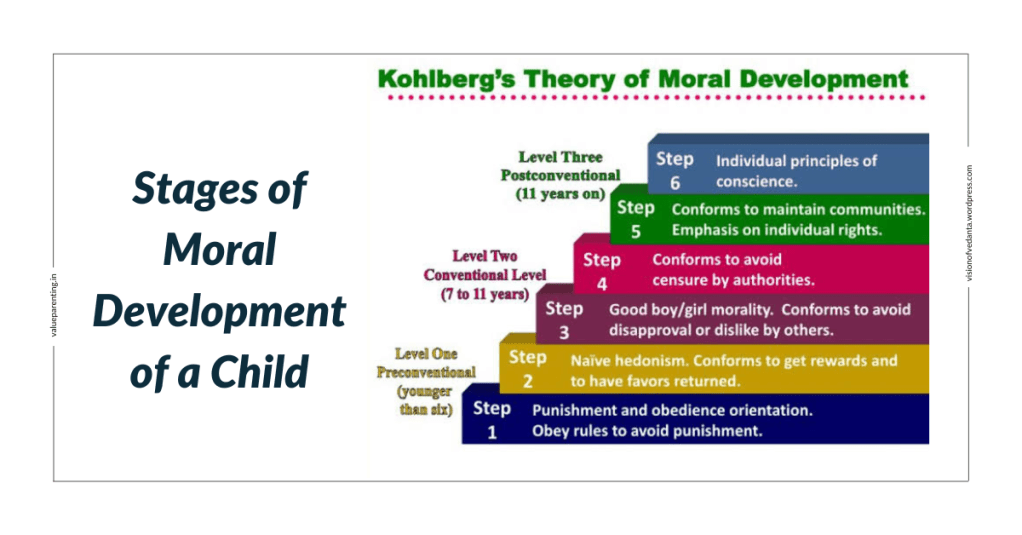
Tracking Moral Development of Children
Moral development is the process through which children develop proper attitudes and behaviours toward other people in society, based on social and cultural norms, rules, and laws. All of us want our children to grow up to be morally strong citizens of society. But how do we know how they are developing, where they stand…
-

Outgrowing the Parenting Instinct
One of human life’s greatest joys is to become a parent. The sheer happiness of holding your child first time in your hand is magical and indescribable. Anyone who has experienced this will vouch for me on this. Even the mere sight of watching a parent with a child brings so many emotions. A parent…
-

Is Meat right for Children?
In this post, I express my stand on the topic based on my own experience. My intention here is not to offend meat eaters and meat lovers. Meat is a dietary choice and something that each of us has to reason to ourselves about. Many children are raised consuming meat- parents encourage and serve meat…
-

Infuse light into Children’s minds
Children are beings of light. They are embodiments of what is called in Vedanta, jñāna-śaktiḥ, the power of knowledge. They are easily nourished by purity, knowledge, truth, intelligence, and mind. This quality, in Sanskrit, is called sattva and it reflects consciousness and hence endows the person with the capacity for clear knowledge and with the…
-
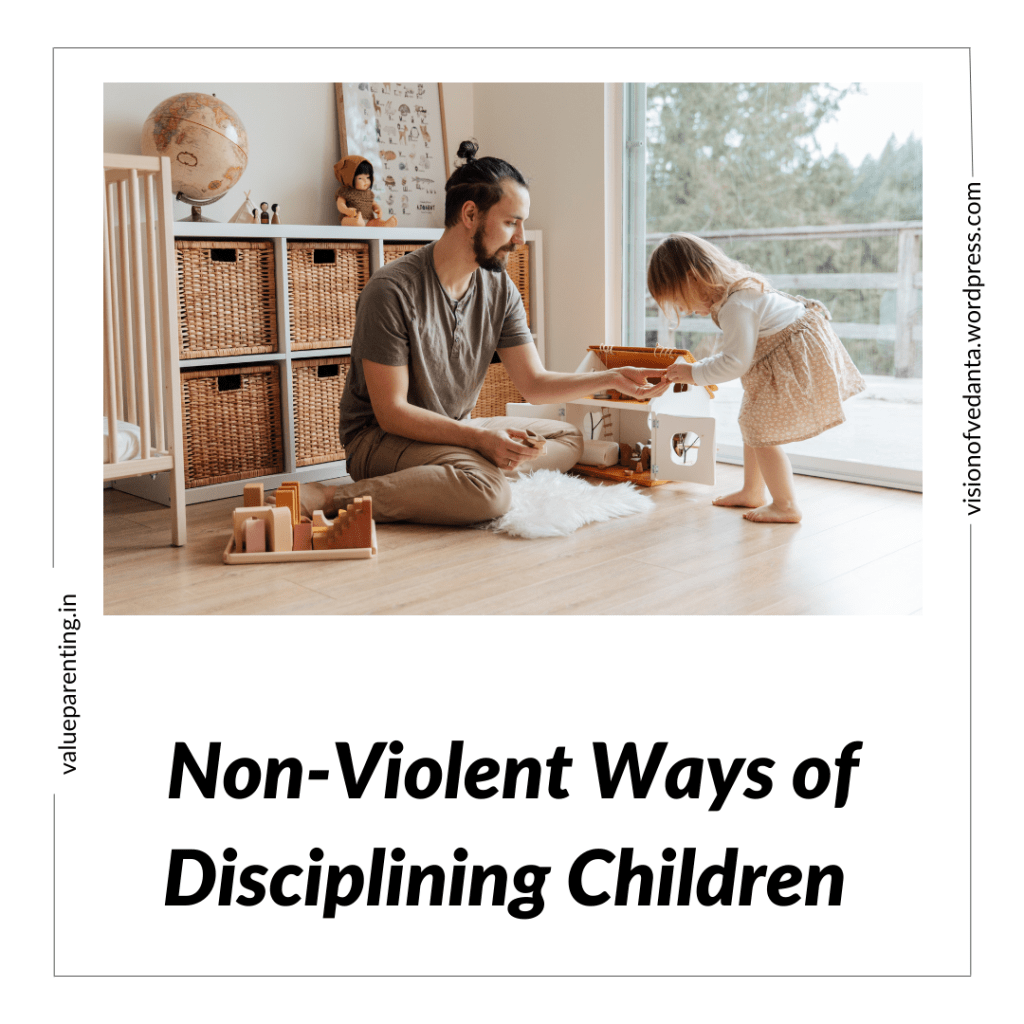
Non-violent Ways of Disciplining Children
This post can be treated as a continuation of two previous posts- one on violent discipline and another on rights of children. In this post, I wish to share solutions as we have already discussed the problem enough. I understand that most of the time parents resort to violent discipline tactics simply out of frustration…
-

Knowing Children’s Rights
As grownups, adults I am sure most of us are aware of our rights- how we like to be treated, what our basic needs are while operating as individuals in a society. We have been educated enough on the topic by social awareness campaigns and through school education as well. But do we know what…
-

It is Wrong to Hit Children. Period.
One of the biggest evils plaguing the lives of the children of the world today is violent discipline practices. Spanking, whooping, beating- it all means hitting, a big, powerful person hitting a smaller, less powerful person. It also goes by the word corporal punishment. In a majority of countries, more than 2 in 3 children…
-
Seeing Family Life as a Life Cycle
Everything that lives follows a lifecycle. I learnt recently how even our family lives trace a lifecycle. A family life cycle is the set of predictable steps and patterns families experience over time. It is a set of emotional and intellectual experiences that one has to go through in a family from childhood to old…
-
Parenting, Religion and Atheism
All of us have experienced and seen the security and comfort a child derives while being in the company of its parents. We know the discomfort a child finds in not seeing its parents around. I believe this longing for security and warmth is something we continue to carry with us as we grow into…
-

Why We Need to Understand and Teach Healthy Nationalism
One of my favourite writers Jared Diamond, Professor of Geography at the University of California, LA says that asking whether nationalism is good or bad is like asking a person whether self-confidence and ego strength are good or bad. Having too much of it means that you are so full of yourself that you ignore…
-
How to Create a Nourishing Space for Children to Learn and Grow
One of the most beautiful gifts that Goa (on the West coast of India) bestows on its inhabitants is space- colourful, creative and cultural space. I bring my daughter to this beautiful place called the Museum of Goa- a gallery and community of contemporary art founded by one of India’s most respected contemporary artists, installer…
-

Being a girl child in India
The Indian constitution today treats women and men alike and bestows upon them the same rights and duties. There are also many initiatives promoting the welfare of the girl child in India. However, the majority of religious communities of India, hence societies continue to place higher importance on a male child over a female one.…
-

From Learning to Knowing
With children, we normally associate ‘learning’ to represent all activities of acquiring new understanding, knowledge, behaviours, skills, values, attitudes, and preferences. It largely means conditioning and I am not discussing how to condition children. Rather I am trying to throw light on how knowing takes place in the mind. Conditioning is easy- be authoritative, set…
-

On Children
A century ago, in a war-torn world, the Lebanese-American poet, painter, and philosopher Kahlil Gibran wrote Prophet in 1923. In that poem, there is an instance where a young mother with a newborn baby at her breast asks for advice on children and parenting. The poetic prophet responds to her. And a woman who held…
-
Trust a better guide than belief
I define ‘trust’ here as a process of reaching a firm judgement that something is true. This is one of those instances where I don’t take the dictionary meaning as it is but I hope I can convince you in favour of this definition by the end of the post. I already have explained in…
-

Using beliefs as means rather than end
Most of us are products of societal learning and conditioning. Based on the communities and traditions that we have been brought up in, we grow up with different kinds of beliefs. A belief is an acceptance that something exists or is true, especially one without proof. Most of these beliefs we never question or are…
-

Do we really love our children?
Let’s us prepare them for the world and not prepare a world for them.
-

How do you measure the success of Parenting?
By far the biggest investment of one’s lifetime is parenting a child. It is an investment which takes 25-30 years of committed labour, love and resources to show signs of maturity.
-

11 Values to value by age 11
Here is a curated list of the eleven most important values that I would like my daughter to appreciate by the time she turns 11. 1. Time: Most regrets we have later in our lives are about how we used our time in the past. It’s the most limited resource each of us has. An…
-

Why protect adolescents and teenagers from social media
What kind of an influence can cause a sixteen year old to end her life? When I was looking up this topic I could see innumerable research studies that have consistently shown direct correlation between social media usage by teens and anxiety, depression, attention deficit, sleep deprivation and mood related issues.
-

Our biggest assets and liabilities are relationships
We can’t own people, but we definitely own relationships. And while we own them, like any property, a relationship can either become an asset or a liability. Be it work or one’s private life, one of the biggest influence on the amount of happiness and misery of our lives are the people that we live,…
-

Teaching children about money management
This is a small video which we can use to explain some basics of money management to our children. Best way is show them this and ask them to explain it back to us. Then we can correct their understanding. Some key lessons to pass on: 1. Importance of saving 2. Power of compounding 3.…
-

Wrong must first of all feel wrong
Human beings are not rational animals but rationalising animals. We reason in the favour of our intuitions. Realising that it is intuition that is our strongest defence and compass in life is really the first step in getting parenting right.
 Home
Home 