Category: Vedanta
-

Be a Lamp unto Yourself
You come to this life alone and leave alone. There is nothing to hold on to in this world except your own being. At least once a day, drop everything on your mind- your worries, projects, tasks, aspirations for some time and just be – be yourself. . Relish that pure joy of being and…
-

The Five Vows for Happiness
A Vrata, simply put, is a vow. There is no religion that doesn’t prescribe or include different kinds of vows. Vows are prescribed either as means to attain greater self-control or expiate sins or recondition the mind to make it more sensitive or receptive or simply to please God or Ishwara or become worthy of…
-

Parenting on the Spiritual Path
Becoming a parent is one of the most rewarding experiences that life can offer and also one of the most fulfilling ones. I consider myself fortunate to be a father to a beautiful daughter for the last 11 years and I have savoured every moment of it. On my blog, I share my parenting journey…
-
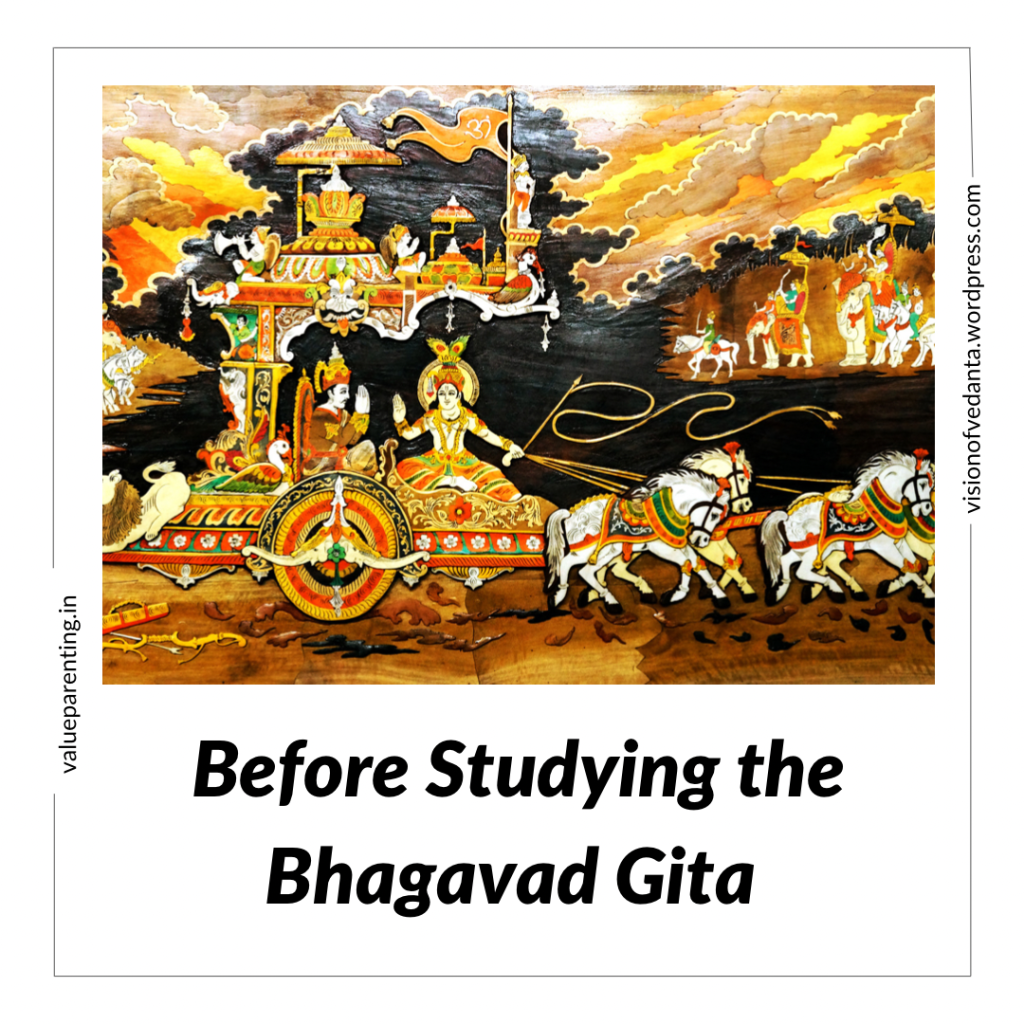
Five things you must know before you start studying the Bhagavad Gita
Most of us who study the Bhagavad Gita consider it a Hindu text and relate to its teachings in the context of Hindu religious beliefs and practices. This can lead to several misunderstandings and misinterpretations at a very foundation level and we end up missing its universal purport and application. To avoid these pitfalls we…
-
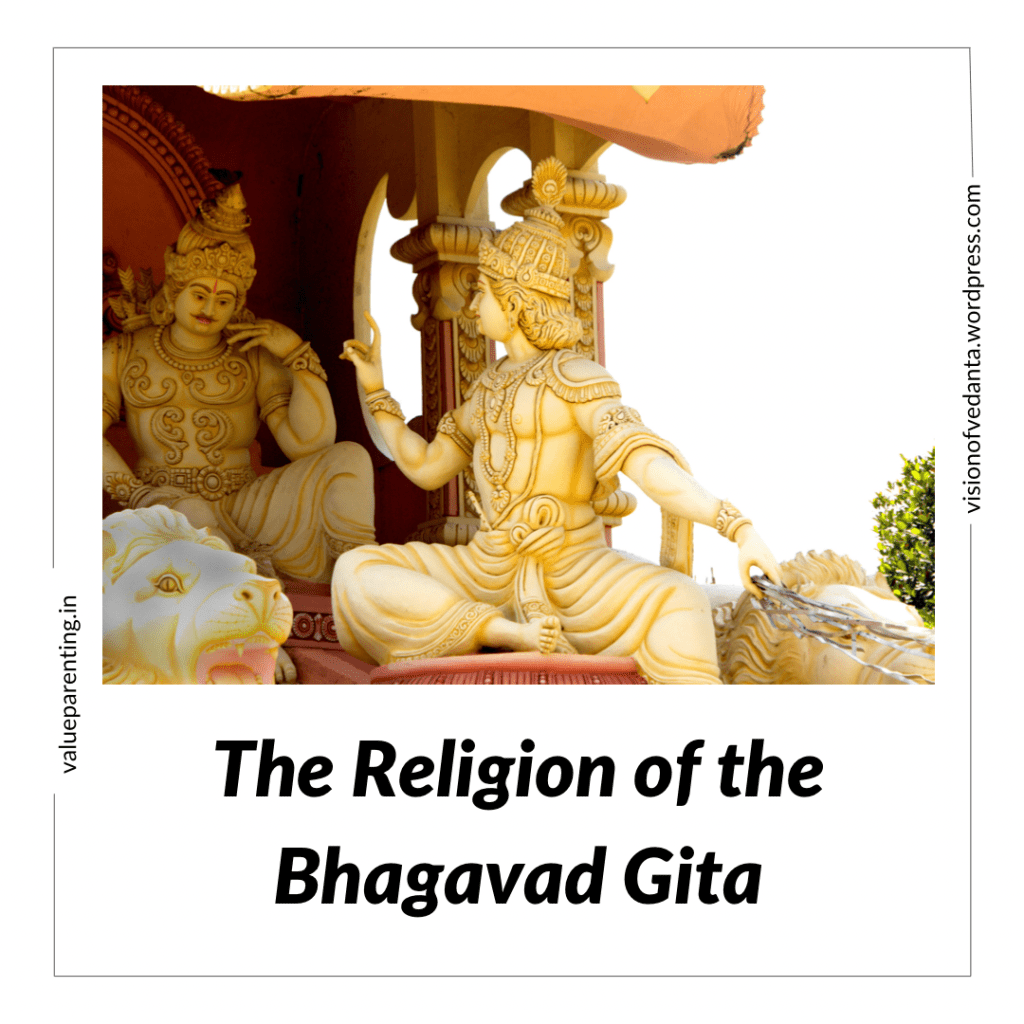
The Religion of the Bhagavad Gita
It’s vacation season in many places in the western world. As travel has opened up after the pandemic, tourist destinations have been thronged by millions of people in India too. Most of us have experienced the difference between hiring a tour agency to plan our itinerary and the effort it takes to plan a travel…
-
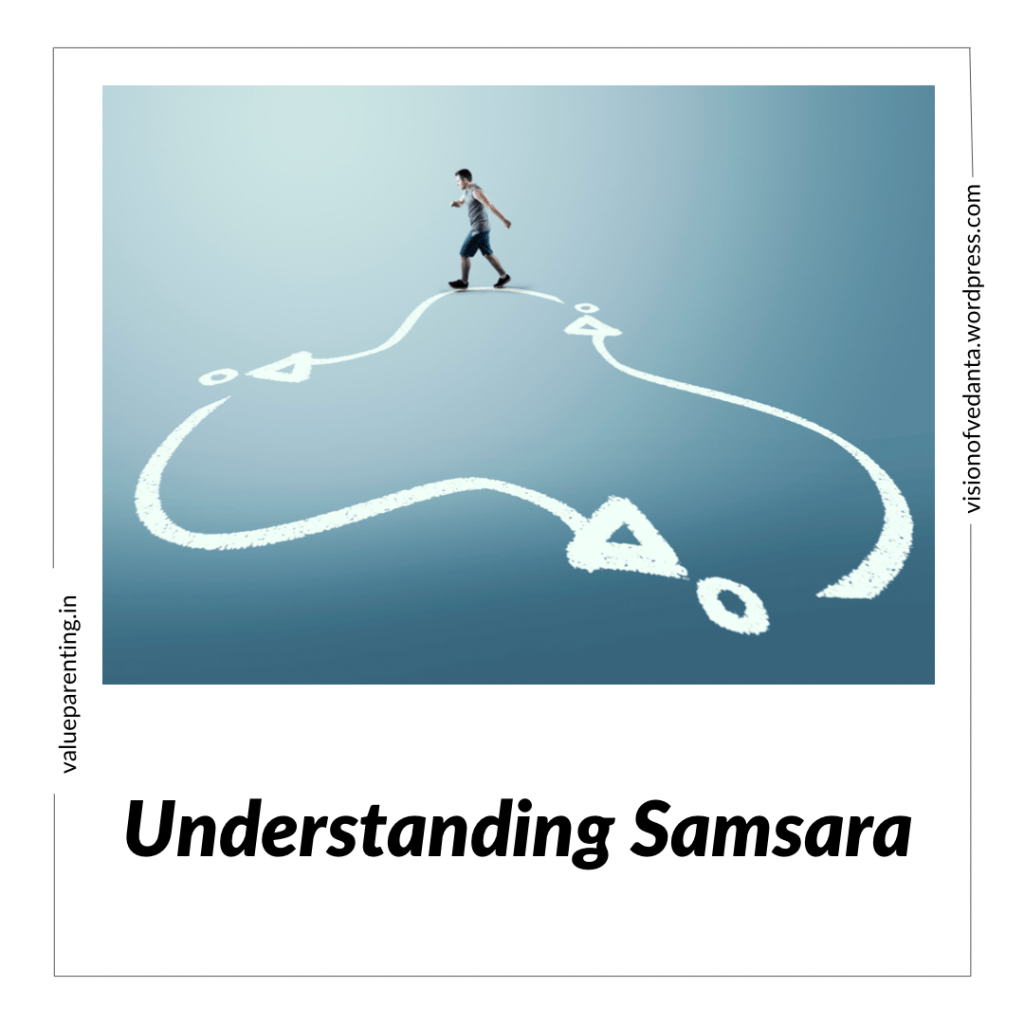
Understanding Samsara
A samsari is similar to a person trying to be debt-free by paying a credit card bill using another credit card.
-
Value in Focus: Vairāgyam | Dispassion
I wrote this for a monthly Vedanta newsletter. Reproducing the same article here. There are two main reasons why we need to understand and practice Vairāgyam. First,vairāgyam is one of the six great virtues used to define bhagaḥ, found in equal, absolute and limitless measures only in Bhagavān. They are viz. aiśvaryam – overlordship, vīryam…
-

Understanding the Practice of Vedanta
Here is an easy understanding of the path to Moksha as laid out in Vedanta tradition. Having said that, I would like to highlight that there is a certain state of mind-body state that is a necessary prerequisite for one to even begin contemplating the possibility of taking the path. This status is called ‘mumukṣutvam’,…
-

55 Pearls of Wisdom from ‘The Autobiography of a Yogi’
I took to reading this book again after over two decades. A new friend was instrumental in getting me to re-read it and I opened up to this opportunity to see where it takes me. Quite unexpectedly it felt I have been reading it for the first time and the book, with its elegant prose,…
-

There is no different Spiritual World
Many religions ultimately try to address the problem of happiness & freedom and they do so by getting you to work towards living the life of a lawful, god-fearing member of society so that you can reap the reward of happiness in an after-life, in a supernatural world not accessible to us as humans today.…
-

Human Suffering and its Panacea
Time and again, the wise sages and prophets of the lore have reiterated this fact: All of life is suffering. And suffering here doesn’t mean just suffering physical pain. We live in a world where we are fortunate to have painkillers that can dampen the most poignant of physical pains but there is still not…
-

The light of Thich Nhat Hanh
The great teacher Thich Nhat Hanh passed away yesterday at the ripe age of 95 at the Từ Hiếu Temple in Huế, Vietnam. Although I am a student of Vedanta, I have learnt a lot from this great master. Today, I am especially reminded of his book ‘The Art of Living’, which came to me…
-
There are no different paths to Moksha
In this post, I would like to clarify the most common misconceptions about Moksha viz. that there are different paths to mokṣaḥ, and every spiritual seeker chooses one own path to it. I also want to clarify what Mokṣaḥ really means because if one doesn’t understand Mokṣaḥ, one can never truly aim for it. One…
-
Ashtanga Yoga: The Eight Steps on the Ladder of Yoga
Sage Patañjali constituted the Aṣṭāṅga Yogaḥ system to help prepare for Meditation and reap the benefits thereof. Patañjali’s Aṣṭāṅga Yogaḥ is an important, preparatory, eight-fold discipline, but not an end in itself as, without the teaching of Vedāntaḥ, one does not gain mokṣaḥ. It consists of:• yamaḥ, (five) prohibitions• niyamaḥ, (five) injunctions• āsanam, posture• prāṇāyāmaḥ,…
-
Mahatma Gandhi’s Love for Bhagavad Gita
-

Pursuit of Worldly Wealth
Today is Krishna Janmashtami, the birth anniversary of Sri Krishna, who gave us the teaching of the Bhagavad Gita, which lays out a roadmap to Moksha, inner freedom and tranquillity. Though many of us like to relate to the good parts of any character as similar to our own selves, there is a lot in…
-

Value in Focus: Adambhitvam | Sincerity
Chapter XIII of the Bhagavad Gita starts with Arjuna asking Kṛṣṇaḥ a set of questions, one among them was ‘What is jñāna?’. As a reply to this question, Lord Kṛṣṇaḥ enumerates twenty qualities or virtues of the mind, which He calls ‘jñāna’ or Knowledge. One of these twenty virtues or values is adambhitvam. Simply translated…
-

Real Meaning of Yoga
What we pronounce as Yoga, has the form yogaḥ in Sanskrit and it is derived from the Sanskrit root ‘Yuj’, meaning ‘to join’ or ‘to yoke’ or ‘to unite’. It means communing with the absolute, non-changing constant that we may call Consciousness or God or Oneness or Is-ness. (Names are many, but the name is…
-

Relating Wellbeing and Flourishing to Moksha, the Final Pursuit
I was reading this book called ‘Flourish’ by Martin Seligman who is considered the father of positive psychology and was relating this concept to Purusharthas of Vedas, and that is when I had this insight. So I thought of sharing it on the blog. I have talked about the four pursuits of time a few…
-
True Wealth as per Vedanta
Wealth by definition is the abundance of valuable possessions; a plentiful supply of a particular desirable thing. It is the value that is sought after by everyone in some form or other. Money is the default form of wealth known to us. Vedanta, the esoteric and ancient science of happiness and fulfilment, discusses real wealth…
-
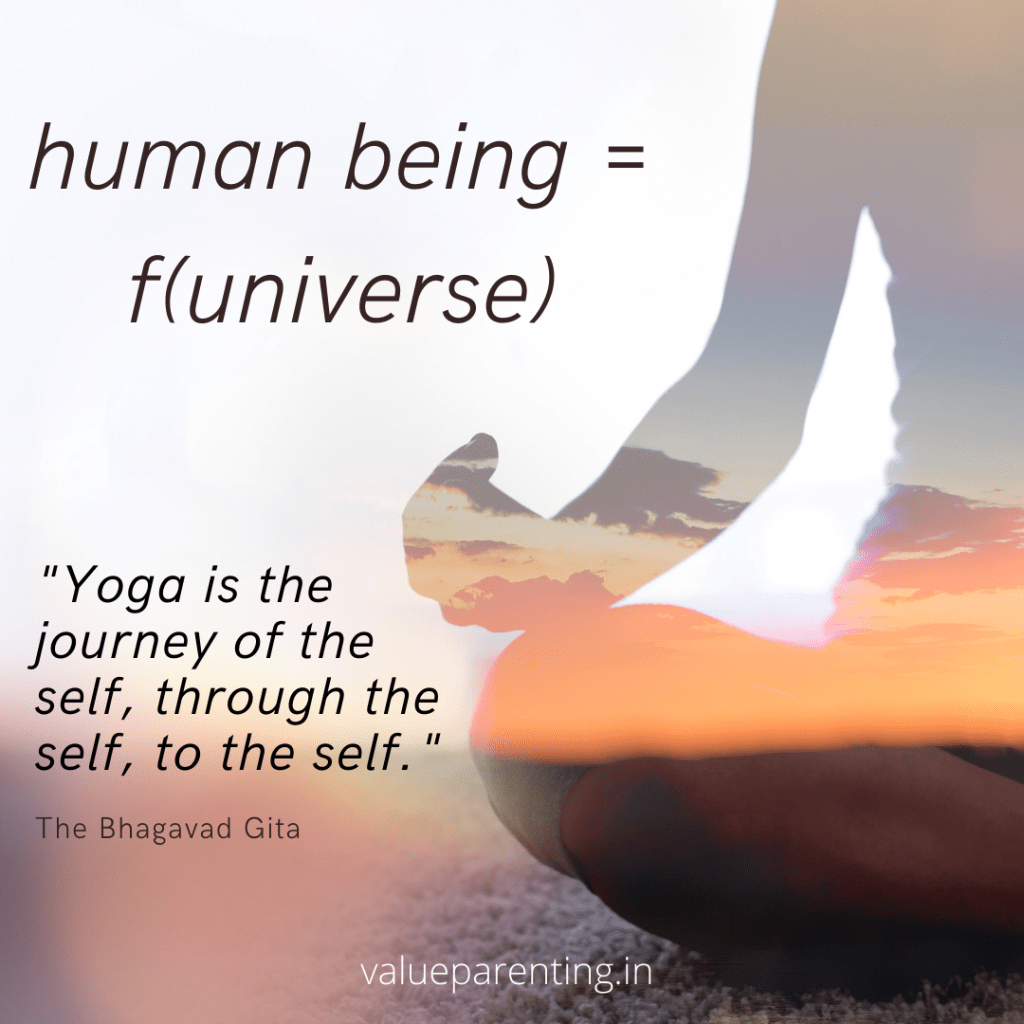
What is the function of a Human Being
We live in a functional world. The function of a heart is to pump blood, the function of the kidneys is to purify the blood, the function of the lungs is to infuse the blood with oxygen. Even many inanimate objects have functions. For example, the function of a bridge is to enable people to…
-
You are the Sun of your Conscious Universe
The Sanskrit word Sakshi meaning witness or seer or your conscious self is used to refer to our inner being that is changeless, the passive witness of the changing states of mind. It is the ever-present knower/ experiencer in every experience, which can never itself be experienced. It is that which illumines our conscious world…
-

Darśana: the highest form of understanding
It’s a gift; it’s like there’s a moment in which the thing is ready to let you see it. In India, this is called darshan. Darshan means getting a view, and if the clouds blow away, as they did once for me, and you get a view of the Himalayas from the foothills, an Indian…
-

Understanding the five coverings of our personality and our experiences
There are several ways of looking at our sense of our own individuality, our sense of experience of this world and that of ourselves. Here, I would like to share one of the ways Vedanta looks at personal experiences as well as our personality.
-

How bondage arises out of freedom
Without knowing the skill to preserve freedom, one simply moves from one bondage to another.
-

Apurnatvam
Apurnatvam, it gnaws at our souls The feeling of incompleteness Constant seeking of the other Things, Power, Status, Wealth, Love No end to this quest, eternal In old age, at the doorstep of death The mind ceaselessly seeks Like hungry living ghosts Still dependent , at another’s mercy This life is ephemeral This body a…
-

Our journey to freedom and independence is about how we choose
I believe each one of us is on a journey and what we are ultimately seeking is freedom. Many call this our spiritual journey and this journey is unique for each one us. Each one of us is seeking freedom in some form- physical, financial, artistic, emotional. It is a journey to satisfy the core…
 Home
Home 