Tag: Vedanta
-
Tossed by the Tides: Fear, Anger, and Desire in the Ocean of Samsāra
Much of what we call “life” — its highs and lows, the triumphs and heartbreaks — is quietly steered by three powerful undercurrents: fear, anger, and desire. So deeply woven into our personal, professional, and social worlds, they often move us without our even knowing. Decisions we think are rational, reactions we believe are justified,…
-
The Illusion of Self: What Altered Minds Teach Us About Who We Are
What if everything you thought you knew about yourself—your memories, your body, even your sense of being—was not as solid as it seemed? Science writer Anil Ananthaswamy invites us to explore this provocative idea through the lens of “altered selves,” experiences shaped by conditions like schizophrenia, Alzheimer’s, foreign limb syndrome, and out-of-body phenomena. His exploration…
-
What It’s Like to Be a Bat: Why Consciousness Still Eludes Science
In 1974, philosopher Thomas Nagel published an essay with a title that sounds like it belongs to a children’s book: What Is It Like to Be a Bat? But behind this seemingly playful question lies one of the most profound philosophical challenges of the modern age: the mystery of consciousness. Specifically, whether we can ever…
-
Building Physical and Mental Fitness for Meditation and Nididhyāsana
In the world today, physical fitness is often about achieving external goals—whether it’s gaining social media followers, sporting six-pack abs, or setting new personal records in sports. However, in Vedānta or the pursuit of moksha (liberation) and jīvanmukti (freedom while living), the purpose of physical health is entirely different. The body is simply a tool,…
-
The Four Conflicts of Life: Finding Peace in a Chaotic World
Life isn’t just a series of events; it’s also a journey through struggles that touch the deepest parts of who we are. Swami Krishnananda explains that these struggles, or “conflicts,” happen in four main areas of life: within ourselves, with others, with nature, and with a larger universal intelligence. Let’s explore these conflicts and what…
-
Shankara, Academia, and the Quest for Truth: Bridging Spirituality and Science
When we think of Adi Shankaracharya, we often view him as one of the greatest spiritual figures in Indian philosophy. His work systematizing Advaita Vedanta and his deep commentary on the Upanishads laid the foundation for non-duality as a spiritual path. But what’s often underappreciated is the way Shankara approached this task—it wasn’t just spiritual;…
-
From Samsara to Moksha: How Vedanta Empowers Us to Break Free
The understanding of Vedanta, far from diminishing our engagement with the world, actually helps us embrace it more fully, enriches our understanding of it, and amplifies our happiness. Vedanta acts as a powerful tool for liberation and strengthens us in our pursuits rather than weakening us.
-
Miswanting: The Inaccurate Predictions of Our Desires and Happiness
When we say we like something, it makes us feel good. Wanting is when we predict that we will like something in the future. Sometimes, we get what we want but end up not liking it. This is called miswanting. Miswanting refers to the situation where we desire or want something but end up feeling…
-
Love as an experience of shared being
The idea of love as an experience of shared being suggests that when we love someone deeply, we feel a sense of oneness or unity with that person. This feeling of oneness is not just a mental or emotional state, but an experiential one, in which we feel a sense of connection and intimacy that…
-

Outgrowing the Parenting Instinct
One of human life’s greatest joys is to become a parent. The sheer happiness of holding your child first time in your hand is magical and indescribable. Anyone who has experienced this will vouch for me on this. Even the mere sight of watching a parent with a child brings so many emotions. A parent…
-
How we have become a Global Organism
In the science fiction of the 1920s, it was imagined that the humans of the future grow bigger and bigger brains to process more and more information and take more and more complex decisions and problem-solving. What actually happened was quite unforeseen. Instead of growing our brains, we started building a gigantic digital nervous system…
-
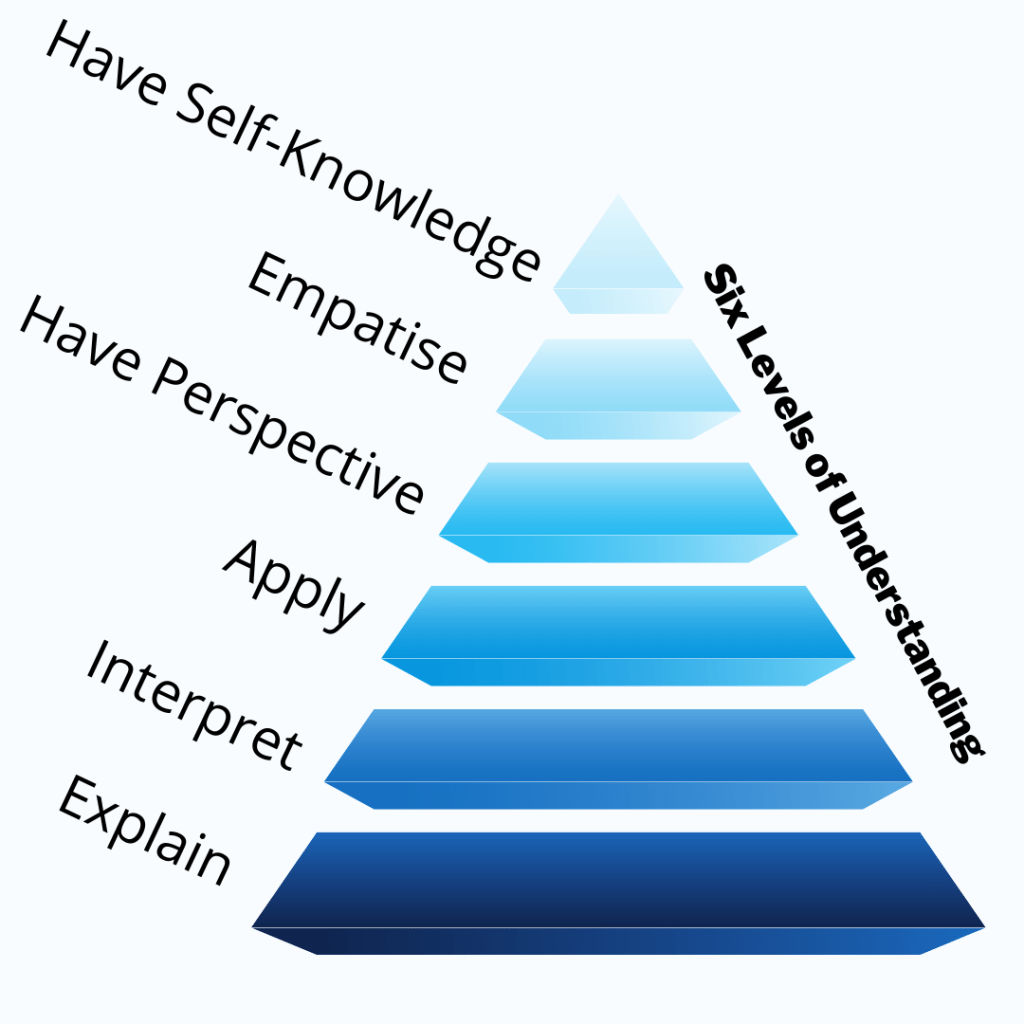
What it means to Understand
What do we mean when we say ‘I understand’ – in a relationship, in business, in academics, in the study of Vedanta? In their book, Understanding by Design (1998), Grant Wiggins and Jay McTighe discuss “Six Facets of Understanding.” They came up with these six facets of understanding to help instructional designers to check if…
-

Choosing Between Pleasure and Happiness
The ancient wisdom of Vedanta tells us that we are frequently posed with a choice in life between Preyas and Shreyas (Sanskrit). Preyas includes all desired activities by an individual at a given point in time while Shreyas includes that which is desirable for all people of all times and places, namely freedom from unhappiness,…
-

Adopting an attitude of Dharma for happy and harmonious living
In simple terms, dharma is the ‘right thing’ to do at any point in time under any given circumstance. It’s an attitude. Dharma itself is aligned and harmonious with the laws of nature- at a physical, psychological and social level. Of course one can debate endlessly about what is right under a given circumstance but…
 Home
Home 